Rabbits make sensitive, intelligent companions and have huge personalities - you just have to let them show you!
Gone are the days when rabbits lived in tiny hutches in the backyard as a ‘starter’ pet for children. Rabbits can be litter trained (just like a cat!), can be crate trained (just like a dog!), and many ‘bunny people’ now keep their rabbits as ‘house rabbits’, living inside the home alongside the family and other rabbit-friendly pets. Other rabbit owners might still have a traditional hutch in the backyard, but let their ‘buns’ roam under supervision in enclosed courtyards or fenced areas during the day.
Unlike dogs and cats, rabbits like to engage with you on their own terms and in their own time. This means they can take a while to learn to be comfortable with you being near them and touching them. Once they get used to you, though, they’ll approach you and show you affection. They might even try and boss you around a bit!
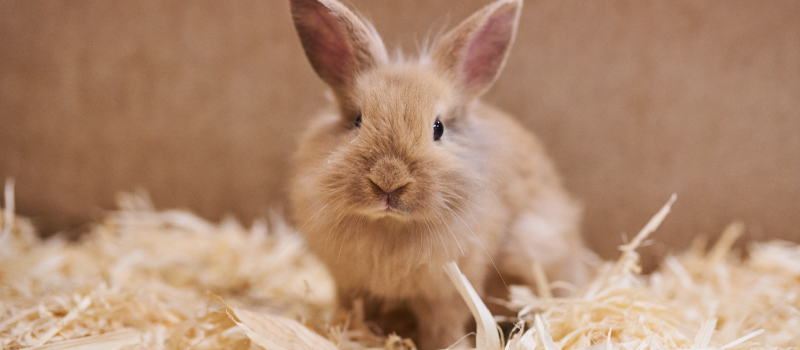
Rabbits are social creatures
They develop special bonds with other rabbits, and with their human owners. This means they develop a unique and loving attachment to specific rabbits and people, which includes wanting to snuggle, be held, be patted, and licking to show who’s boss. (Hint – if the rabbit’s licking you, you’re the boss! But if you’re patting the rabbit or its being licked by another rabbit, it thinks it’s the boss). These displays of submission (such as licking) and dominance (being licked, or ‘bowing’ to invite being licked) can extend to ‘humping’ (just like dogs - guess which bunny is dominant in this situation?).
Rabbits communicate using a range of behaviours and even some sounds!
Rabbits show how relaxed they are by how they lay and stretch out (the more stretched out or ‘long’ a bunny looks, the more relaxed and secure it feels). A rabbit being pat on the head getting head will chatter or grind its teeth lightly to show you it is content; an excited, energic bunny will jump and twist in the air, doing a ‘binky’ to show you it is exuberant! An annoyed or angry bunny might grunt at you (with or without a gentle nip), and a rabbit in pain will loudly grind its teeth or squeal. The smaller and tighter a rabbit holds its body, the more afraid it is or perhaps it is in pain. You will get to know your rabbit the more time you spend observing and interacting with it, on its own terms.
Because rabbits develop strong bonds and are social creatures, this makes them excellent companions for adults who enjoy a quiet lifestyle, a slower pace of life, or who are busy during the daytime but home morning and evenings.
Rabbits are diurnal, meaning they are most active in the mornings and evenings, and prefer to rest during the daytime – this also makes them suited to people who work regular business hours, and who want a friendly companion but don’t want their pet to be anxious during their daytime absence. To make sure your rabbit is truly happy, it’s best to keep them desexed and in pairs (male and female and female and female work best, but male and male can work too). You’ve heard the phrase ‘breeding like rabbits’, right? Desexing your rabbits not only stops them breeding, but can also improve their health and longevity, and reduce aggressive behaviours due to hormones.
If you’re thinking of getting a rabbit companion, and keeping them inside as house bunnies, take care to 'rabbit proof’ the areas you will keep your rabbit.
Rabbits love to chew and have teeth that don’t stop growing. That’s why they chew so much! They will chew wood, soft plastic, and fabric – so take care to make your home pet-friendly, and expect your bunny to make itself at home, just as you would with a dog or cat. Once your bun is litter trained, feeling safe and secure, and you’ve gotten to know one another, you can expect lots of play time together and gentle pat and snuggles in front of the TV or with a book.
For ideas about how to keep a rabbit as a house companion, visit the House Rabbit Society.
If you decide you want a rabbit but want to keep them outside, you can get some ideas about how to house and keep them safe from diseases like myxomatosis or calicivirus at the Victorian Department of Agriculture and RSPCA Victoria.
If you are thinking about adopting a rabbit or bunny pair, please consider GAWS.
We often have many rabbits in our care waiting for their forever home. Rabbits from GAWS are desexed and vaccinated. You can see who we have available here:
Thinking of adopting a bunny?
If you are thinking about adopting a rabbit or bunny pair, please consider GAWS. We often have many rabbits in our care waiting for their forever home. Rabbits from GAWS are desexed and vaccinated. You can see who we have available here:
Learn More